
We Are The World
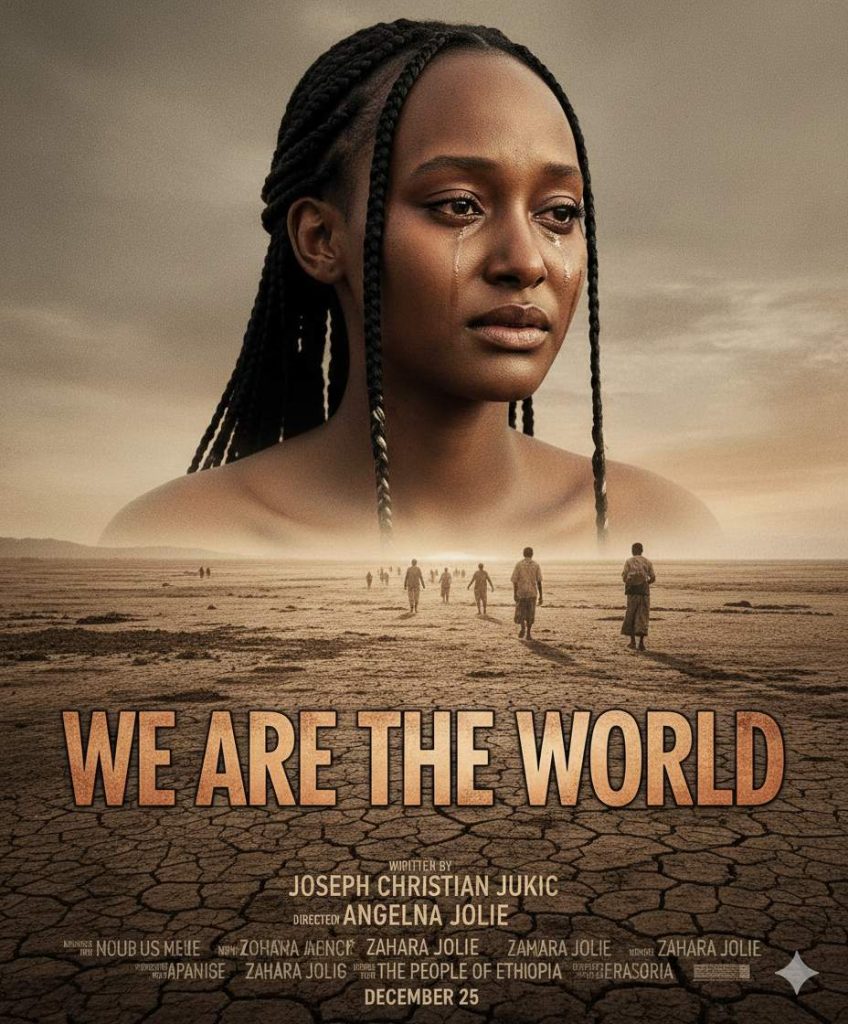
A Film Treatment by Joseph Christian Jukic
Directed by Angelina Jolie
Starring Zahara Jolie
Logline: In the harrowing grip of the 1985 Ethiopian famine, a resilient young woman’s fight for survival and family ignites a global movement of compassion, forcing the world to confront the devastating human cost of indifference.
Synopsis:
“We Are The World” is a powerful and emotionally resonant drama that plunges audiences into the heart-wrenching reality of the 1985 Ethiopian famine, viewed through the eyes of Elara, a courageous and spirited teenager (portrayed by Zahara Jolie). The film opens in a vibrant, yet increasingly parched, rural Ethiopian village. Elara, along with her younger brother, Mika, and their aging grandmother, depends on the land that is slowly turning to dust.
As the famine intensifies, the once-familiar landscape transforms into a barren wasteland. Food supplies dwindle, water sources dry up, and the joyous sounds of village life are replaced by the somber whispers of hunger and despair. Elara, fiercely protective of her family, shoulders immense responsibility. She makes daily, arduous journeys to a distant, dwindling well, carrying heavy jerry cans, and tirelessly searches for any edible scraps.
The film meticulously portrays the brutal daily struggles: the hollow ache of hunger, the weakness that saps energy, and the constant fear of losing loved ones. We witness the difficult decisions families are forced to make, the dwindling hope, and the pervasive sense of helplessness. A pivotal moment comes when Mika falls gravely ill due to malnutrition. Desperate, Elara overhears whispers of a distant feeding camp run by international aid workers. Against her grandmother’s warnings about the dangers of the journey, Elara determines to take Mika there, believing it’s their only chance.
The journey is an odyssey of survival, fraught with peril. They traverse vast, desolate landscapes, encountering other displaced families, each with their own stories of loss and resilience. Elara’s determination is tested at every turn by exhaustion, thirst, and the sight of countless others suffering. Along the way, she forms a bond with a wise, elderly woman named Aster, who offers guidance and a glimmer of hope amidst the desolation.
Upon reaching the overcrowded and chaotic feeding camp, Elara experiences a mix of relief and renewed despair. While Mika receives medical attention and food, the sheer scale of the crisis becomes overwhelmingly apparent. She encounters dedicated but overwhelmed aid workers, some of whom are struggling with their own emotional toll. It is here that Elara’s innate leadership and empathy begin to shine. She assists in the camp, comforting children, sharing what little strength she has, and advocating for the most vulnerable.
Meanwhile, in the Western world, news reports and documentaries begin to expose the severity of the famine. A young, idealistic American journalist, Sarah Jensen, is particularly moved by the images and stories from Ethiopia. She becomes a relentless advocate, using her platform to raise awareness and challenge the global community’s inaction.
The film then interweaves these two narratives: Elara’s personal struggle and resilience in Ethiopia, and Sarah’s growing efforts to galvanize support internationally. The iconic song “We Are The World” becomes a symbolic backdrop, capturing the burgeoning global awareness and the collective human response. We see glimpses of the song’s recording, juxtaposed with the stark realities faced by Elara and her community.
The climax of the film centers around the arrival of significant international aid, a direct result of the global outpouring of support. While the relief is immense, the film doesn’t shy away from the challenges that remain. Elara, having witnessed the devastating impact of the famine firsthand, emerges not only as a survivor but as a voice for her people. She understands that true change requires more than just temporary aid; it demands sustained attention and fundamental solutions.
Themes:
- Resilience and the Human Spirit: The unwavering strength and determination of individuals in the face of unimaginable hardship.
- The Power of Collective Action: How global empathy and collaboration can effect profound change.
- Family and Community: The bonds that sustain hope and provide strength during times of crisis.
- The Injustice of Famine: Exploring the systemic issues that contribute to such humanitarian catastrophes.
- Voice and Advocacy: The importance of speaking up for those who cannot.
Visual Style:
Directed by Angelina Jolie, the film will employ a naturalistic and visually striking style. The Ethiopian landscape will be portrayed as both breathtakingly beautiful and brutally unforgiving. Cinematography will emphasize wide, expansive shots to convey the vastness of the land and the isolation of the people, contrasted with intimate close-ups to capture the raw emotions and resilience of the characters. Color grading will shift from vibrant hues in the early scenes to desaturated, earthy tones as the famine intensifies, gradually returning to warmer colors as hope and aid arrive.
Music:
The score will be deeply evocative, blending traditional Ethiopian musical elements with a contemporary orchestral sound. The song “We Are The World” will be used strategically, not just as a historical artifact, but as a powerful emotional anchor, symbolizing the global conscience awakening.
Impact:
“We Are The World” aims to be more than just a historical recounting. It seeks to be a timeless story about humanity’s capacity for both suffering and immense compassion. By focusing on the personal journey of Elara, the film will connect audiences emotionally to a crisis that might otherwise feel distant, inspiring reflection on our shared responsibility to one another and the enduring power of hope.