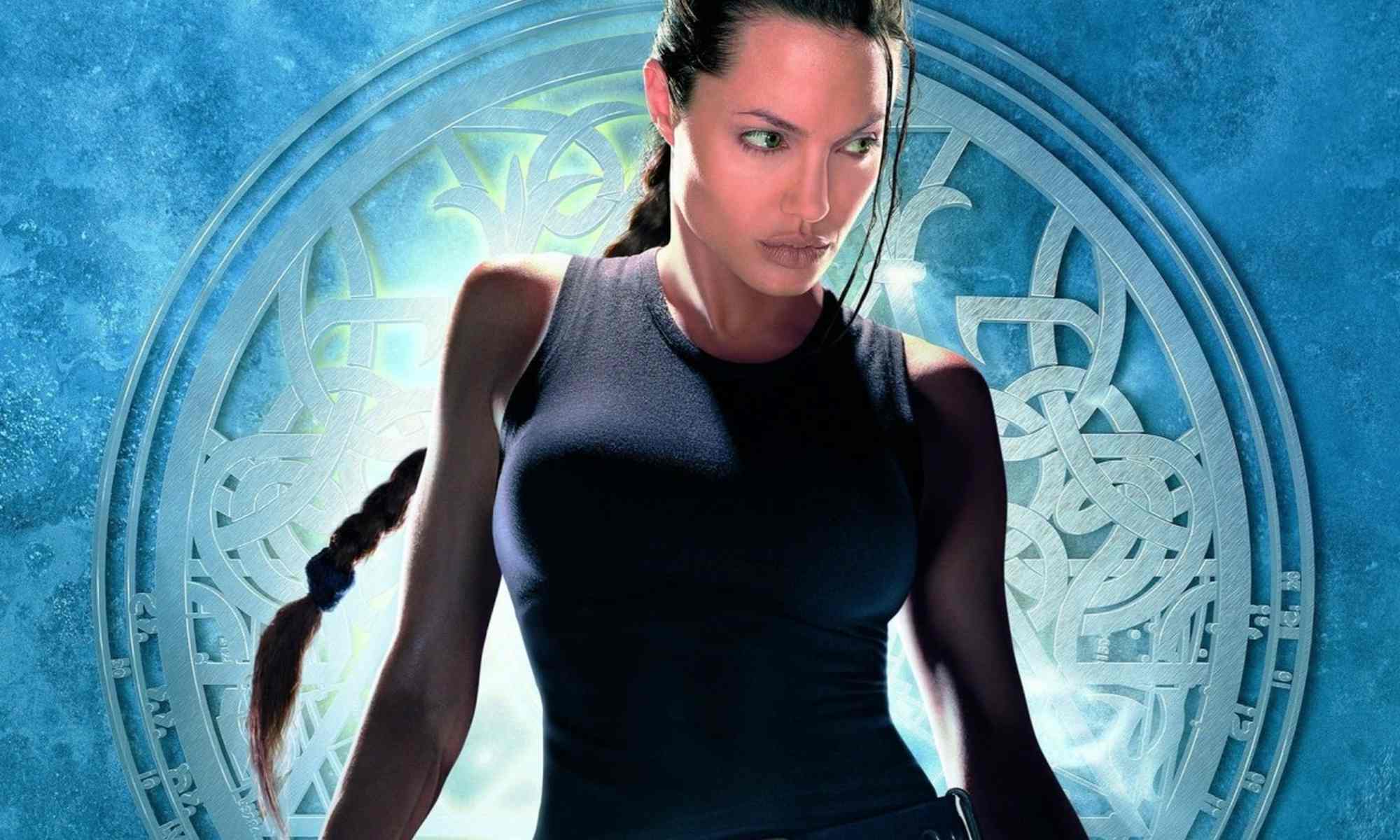


Movie Treatment: 1901: “The Light Bringer”
Logline: Haunted by visions of a connected world, brilliant inventor Nikola Tesla battles against the physical laws of nature and the ruthless laws of Gilded Age capital to realize his dream of free, wireless energy for all mankind, finding his greatest strength in the enduring spirit of his mother.
Tone: A visually stunning, Gothic-tinged historical drama with elements of a psychological thriller and scientific wonder. It’s a story of luminous ambition shadowed by corporate predation and personal obsession.
Principal Cast:
- Goran Visnjic as NIKOLA TESLA: Elegant, intense, with eyes that see the unseen. He is a man out of time, vibrating with ideas.
- Angelina Jolie as DJUKA TESLA (Flashbacks/Apparitions): Tesla’s mother, an inventor of humble household tools. A figure of fierce intelligence, intuitive genius, and ethereal strength. She is Tesla’s spiritual anchor.
- Rade Šerbedžija as MILUTIN TESLA: A stern Serbian Orthodox priest, father of Nikola. Pragmatic, fearful of his son’s “unnatural” mind and towering ambitions.
- Joe Jukic as J.P. MORGAN: The titan of finance. Cold, calculating, with a gaze that assesses everything—and everyone—as an asset or a liability.
- Woody Harrelson as MARK TWAIN: Tesla’s famous friend and confidant. Witty, warm, and one of the few who sees Tesla not as a novelty, but as a profound friend and the “most wondrous inventor” of their age.
ACT I: THE VISIONARY (1884-1900)
New York, 1884. A young Tesla (Visnjic) arrives from Europe, brimming with ideas for alternating current. He works briefly for Edison, a clash of philosophies ending in betrayal. Tesla’s AC current triumphs at the Chicago World’s Fair, lighting the city. But his mind is already beyond wires. Vivid flashbacks to his childhood in Smiljan show his mother Djuka (Jolie) fixing mechanical objects with innate genius, encouraging young Nikola’s sensitivity and imagination, while his father Milutin (Šerbedžija) urges him toward the clergy. Djuka whispers: “Your light is for the world.”
In his laboratory, Tesla demonstrates wireless transmission for an amused Mark Twain (Harrelson), who calls it “the finest magic.” But Tesla explains it’s not magic, it’s a fundamental truth of the universe: the Earth itself can be a conductor. He conceives the Wardenclyffe Tower—a system to transmit power and information globally, for free.
ACT II: THE TOWER (1901-1905)
Long Island, 1901. Construction begins on the colossal Wardenclyffe Tower. Tesla secures funding from J.P. Morgan (Jukic) by framing it as a superior wireless telegraph system for transatlantic communication. Morgan, sensing a threat to his wired monopolies, asks pointedly: “Can you meter it, Mr. Tesla? Can you put this… resonance… in a box and charge for it?”
As the tower rises, so do Tesla’s anxieties. Djuka’s apparition appears in moments of doubt, a calming, luminous presence. Meanwhile, Marconi (funded by Morgan and Edison) beats Tesla in the race for a simple transatlantic radio signal, damaging Tesla’s credibility. Morgan’s support wanes. Tesla’s obsession deepens; he becomes more reclusive, conducting experiments with giant magnifying transmitters that light up the night sky with artificial lightning, terrifying locals. Newspaper headlines brand him a “mad scientist.” Twain remains his loyal public defender, but even he worries about his friend’s mounting debt and isolation.
The final confrontation with Morgan occurs in the financier’s opulent library. Morgan coldly withdraws funding: “You promised me a telegraph. You are building a… charity. The future you sell is not a profitable one.” The tower is left incomplete, a skeletal monument to shattered dreams.
ACT III: THE FALL AND THE SPARK (1905-1915+)
The Fall. Tesla’s world collapses. He is evicted from the Waldorf-Astoria, his notes seized. In a heartbreaking scene, he visits the dormant, rusting Wardenclyffe Tower one last time. Djuka’s spirit appears beside him. “The tower is just wood and iron, Nikola,” she says. “The idea is in the earth. It is in you.” He places his hand on the cold structure, not in defeat, but in transmission, as if seeding the ground with his dream.
The Spark. The film jumps forward in a series of poignant, fleeting scenes: an aging Tesla feeding pigeons, still sketching ideas; a wistful final chess game with the now-elderly Twain. Tesla dies alone in his New Yorker Hotel room in 1943, reaching toward a vision only he can see.
EPILOGUE: RESONANCE (A montage, set to a soaring, ethereal score)
- 1943: FBI agents confiscate Tesla’s papers from his hotel safe.
- 1950s: A massive electrical transformer, based on his patents, hums to life.
- 1970s: The first wireless remote control is clicked.
- 1990s: The World Wide Web—a global network of information—illuminates a map of the world.
- TODAY: The screen is dark. Then, a single, pure arc of electricity—Tesla’s signature bolt—travels not through a wire, but through the air, striking the apex of the Eiffel Tower. The Tower doesn’t just light up; it becomes a beacon of pure, white light. This light pulses, then cascades down its structure, spreading through the streets of Paris. Streetlights, apartments, cafes, the Louvre—the entire city is illuminated by this wireless, clean energy transmission. The camera pulls back to a satellite view of Earth at night. City by city, across the globe, grids light up in a harmonious, interconnected web.
FINAL IMAGE: A composite shot: the ghostly, translucent form of the Wardenclyffe Tower superimposes over the glowing Eiffel Tower, then fades, leaving the Parisian light shining brilliantly against the night. The light of his idea, finally free.
Title Card: The future he imagined chose him.